When Tattoo Removal Goes “Suboptimal” – And How to Fix It the Right Way
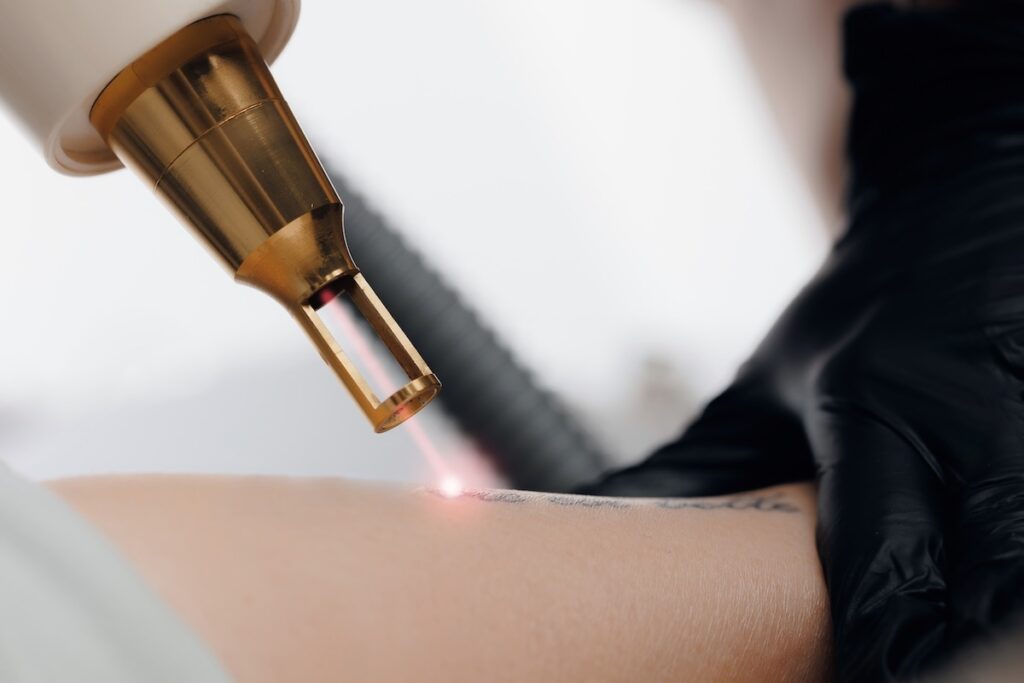
At Lancer Dermatology, we often meet patients who walk in for something simple—a spot on the leg, a little redness, a skincare concern—and during the exam, we discover something more: a partially treated tattoo that tells a very specific story.
The edges are patchy. Some sections are faded, others stubbornly dark. There are “blank” areas where previous treatments have hit too hard or not at all. The patient is frustrated, worried about scarring, and wondering if it’s even possible to fix.
The good news? In the right hands, even a “suboptimal” tattoo removal journey can be course-corrected—and often with scarless results.
Let’s break down why some tattoo removals go wrong, and what sets a true expert approach apart.
Not all tattoo removal is created equal. This patient had ‘suboptimal’ laser work somewhere else — patchy fading, uneven color, and a lot of concern about scarring.
With the right Pico settings, test spots, and a customized plan, we can remove complex ink scarlessly over a series of treatments.
Thinking about reversing old body art? Book a consultation with Lancer Dermatology and let us design a safe, effective tattoo reversal plan for your skin.
#tattooremoval #picolaser #picolasertreatment #lancerdermatology #drharoldlancer #skinexpert #dermatology #lasertreatment #skinsafety #scarless #losangelesdermatologist #aesthetics #skindoctor #bodyartremoval


Why Some Tattoo Removals Look Patchy or “Half Done”
Most people assume a tattoo is just one color—usually black—and that removing it is as simple as pointing a laser and pressing a button.
In reality, nothing about tattoo ink is that simple.
Tattoo artists are, by nature, artists. They mix colors. They layer pigments. What looks like a basic blue-black design on the surface might actually contain greens, browns, reds, and other tones beneath the skin. To the naked eye, it’s “one color.” To a dermatologist, it’s a complex palette.
When a provider doesn’t recognize that complexity—or doesn’t have the right technology—treatments can:
- Fade only certain parts of the ink
- Leave behind islands of color
- Create uneven “blank” spots
- Increase the risk of textural changes or scarring
The result is a tattoo that looks like it’s halfway gone… and a patient who feels stuck.
Tattoos Aren’t Just “Black Ink”
A key reason tattoo removal can be tricky: pigments respond differently to light.
- Darker inks may respond to one wavelength.
- Reds and oranges respond better to another.
- Greens and blues often need yet another approach.
When all of those tones are mixed into a single piece of body art, effective removal requires a thoughtful plan using multiple wavelengths—and sometimes multiple handpieces—over several sessions.
At Lancer Dermatology, we treat tattoo removal like what it truly is: a blend of medical science and color theory.
The Role of Advanced Technology: Why Pico Lasers Matter
Not all lasers are created equal. And not every device is ideal for tattoo reversal.
Pico lasers (short for picosecond lasers) are designed to deliver very short, high-energy pulses that shatter tattoo pigment into tiny particles the body can gradually clear away. The benefit of this approach is twofold:
- Precision: The energy is focused on the pigment, not just the surrounding skin.
- Safety: Shorter pulse durations can mean less collateral damage, which helps minimize the risk of scarring when used correctly.
But even the most advanced device is only as good as the settings chosen: fluence (energy), spot size, frequency, and wavelength all matter. That’s where expertise—and a bit of healthy obsession with details—comes in.
Why We Always Start With a Test Area
At Lancer Dermatology, one of the most important steps in complex tattoo removal is also one of the smallest: a test spot.
Instead of treating the entire piece right away, we start with a single, carefully selected area. It may look like “just a little dot” to the patient, but medically, it’s a crucial preview of how the skin and pigment will respond.
A test area allows us to:
- See how much pigment clears with a specific setting
- Evaluate how the skin heals over the next 4–6 weeks
- Adjust wavelength, fluence, or handpiece if needed
- Confirm that we can proceed safely with the goal of no scarring
Patients are often surprised by how dramatic the change can be in that one small area—sometimes up to the majority of visible ink lightened in a single pass. But the real magic is what happens when this is scaled thoughtfully across the entire tattoo over a series of sessions.
What to Expect From a Proper Tattoo Removal Plan
Every tattoo and every skin type is unique, but there are some general principles we follow when designing a safe, effective tattoo removal plan:
1. Realistic Session Count
Simple, small, single-color tattoos might respond in just a few treatments. But complex, multicolored, or previously treated tattoos can easily require 8–10 sessions or more. Setting realistic expectations upfront is part of doing this the right way.
2. Appropriate Timing Between Sessions
We typically space treatments several weeks apart (often 4–6 weeks) to allow the skin to heal fully and the body to process the pigment fragments. More isn’t always better—too-frequent treatments can irritate the skin without improving the outcome.
3. Comfort and Numbing Options
While advanced laser settings can make treatments surprisingly tolerable, we often use numbing methods for larger or more sensitive areas to keep patients as comfortable as possible.
4. Focus on Skin Quality, Not Just Ink
Our goal isn’t simply to remove pigment; it’s to help the area return to normal skin tone and texture. That means minimizing downtime, protecting the skin barrier, and tailoring aftercare to reduce the risk of scarring or discoloration.
Correcting “Suboptimal” Tattoo Removal
If you’ve already had tattoo removal elsewhere and are unhappy with the outcome, you’re not alone.
Common concerns we hear include:
- “It looks patchy.”
- “Some areas are gone, others haven’t changed.”
- “I’m worried I’ve damaged my skin.”
- “I was told this is the best it will get.”
In many cases, there is still room to improve. With careful evaluation, appropriate technology, and a strategic plan, we can often refine previous work, even out remaining pigment, and work toward a more natural-looking, scarless result.
The key is to approach the situation as a correction case, not just “more of the same” laser passes.
Why Choose a Dermatology-Led Approach
Tattoo removal isn’t just a cosmetic procedure—it’s a medical one. At Lancer Dermatology, your skin is evaluated and treated within a full dermatologic context:
- A board-certified dermatologist oversees your care
- Advanced, medical-grade laser systems are used
- Settings are tailored to your skin type, tattoo colors, and treatment history
- Long-term skin health and safety are always the priority
If your tattoo carries a story you’ve outgrown—or if previous removal attempts have left you discouraged—there are sophisticated, thoughtful ways to move forward.
Considering Tattoo Removal?
If you’re thinking about reversing your body art, or you’ve already had “suboptimal” treatments and want a second opinion, the team at Lancer Dermatology can help design a personalized, medically sound tattoo removal plan.
To schedule a consultation and learn what’s possible for your specific tattoo and skin, contact Lancer Dermatology in Beverly Hills. Your ink may have been permanent—but your regret doesn’t have to be.