The First Signs of Hair Loss in Men—and Why Early Evaluation Matters
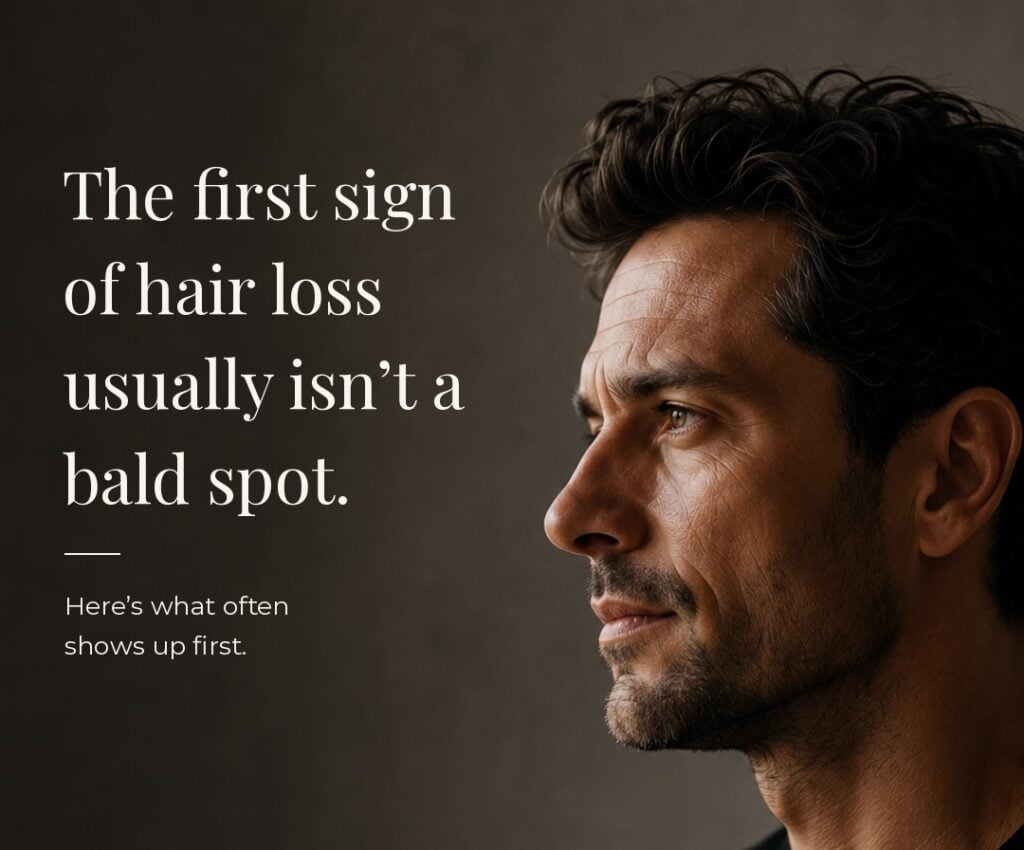
Hair loss does not always begin with an obvious bald spot.
More often, it starts with small changes that are easy to overlook: a hairline that appears slightly different in photos, more scalp showing under bright light, or a hairstyle that no longer looks quite as full as it once did.
Because these changes tend to happen gradually, many men adjust without realizing it. They change how they part their hair, use more styling product, or avoid certain angles in photos. By the time the thinning feels obvious, it may have been progressing for months—or even years.
Recognizing the early signs does not mean assuming the worst. Hair shedding and thinning can happen for many reasons, and not every change leads to permanent hair loss. It simply means paying attention and getting a professional evaluation when something seems different.
Hair loss rarely begins with a dramatic change.
More often, it starts quietly.
A little more scalp showing in bright light. A hairline that looks slightly different in old photos. Hair that doesn’t seem quite as full as it used to.
Because these changes happen gradually, they’re easy to dismiss. But they’re also the reason early evaluation matters.
Not every type of hair loss has the same cause. Genetics, stress, nutritional deficiencies, certain medications, medical conditions, and autoimmune disorders can all play a role. Getting the right diagnosis is the first step toward finding the right treatment.
The earlier you understand what’s causing the change, the more options you may have to help preserve and improve your hair.
If you’ve noticed subtle changes over the past several months, don’t ignore them. A consultation with a board-certified dermatologist can help identify the cause and create a treatment plan that’s tailored to you.
Healthy hair starts with understanding what’s happening beneath the surface.
Save this post for future reference, and share it with someone who might benefit from seeing these early signs.
#HairLoss #Dermatology #MensHealth #HealthyHair #SkinHealth


What Are the Early Signs of Hair Loss in Men?
The first signs vary from person to person, but a few patterns are especially common.
1. Your hairline is slowly moving back
A gradually receding hairline is one of the most recognizable signs of male pattern hair loss. It often begins around the temples and may create a more noticeable “M” shape over time.
The key word is gradually. You may not notice a difference from one morning to the next, but older photographs can make the change easier to see.
Try comparing photos taken in similar lighting and from similar angles. A consistent shift over several months may be worth discussing with a dermatologist.
2. You are noticing more hair in the shower
Some daily shedding is completely normal. Hair naturally moves through cycles of growing, resting, and shedding.
What matters is a noticeable change from what is normal for you.
You may see more hair collecting near the shower drain, on your pillow, or in your hands after washing your hair. Increased shedding can happen after illness, significant stress, surgery, rapid weight loss, certain medications, or another physical or emotional trigger.
This type of shedding may be temporary, but it is still helpful to identify the cause rather than guessing.
3. The crown looks thinner
Thinning at the crown can be surprisingly difficult to notice because it is not an area most people see in the mirror.
A partner, barber, or hairstylist may notice it first. It may also become more apparent in photographs taken from above or under direct overhead lighting.
In male pattern hair loss, thinning at the crown may gradually expand while the hairline is also receding. However, crown thinning can have other causes, which is why an examination is important.
4. Your usual hairstyle no longer looks as full
Sometimes the first clue is not visible hair loss—it is a change in how your hair behaves.
You may find that your usual style falls flatter, exposes more scalp, or requires additional product. You might begin parting your hair differently without consciously deciding to do so.
Hair can also look less full because of breakage, changes in texture, or damage to the hair shaft. A dermatologist can help determine whether the concern involves true hair loss, hair breakage, increased shedding, or a combination of factors.
5. More scalp is visible in bright light or photographs
Bathroom lighting can be forgiving. Direct sunlight, overhead lighting, and camera flashes are often less so.
Seeing more scalp does not automatically mean you are losing your hair. Wet hair, naturally fine strands, and certain hairstyles can all make the scalp more visible. But if the amount of visible scalp is increasing, especially along the hairline or crown, it may be an early sign of thinning.
Photographs can be useful for tracking changes more objectively. Take them in consistent lighting, with the same hairstyle and from the same angles every few months.
6. Hair loss runs in your family
Family history is not technically a symptom, but it is an important clue.
Male pattern hair loss, also known as androgenetic alopecia, is influenced by genetics and sensitivity to androgens. It can begin earlier than many people expect, sometimes during the late teens or twenties, although it becomes more common with age.
Having relatives with hair loss does not guarantee that you will experience the same pattern or rate of thinning. It does mean that subtle changes may deserve closer attention.
Not All Hair Loss Is the Same
It is tempting to assume that every receding hairline or thinning crown is simply genetic. Male pattern hair loss is common, but it is only one possible explanation.
Hair loss and excessive shedding can also be associated with:
- Physical or emotional stress
- Recent illness or surgery
- Certain medications
- Nutritional deficiencies
- Autoimmune conditions
- Scalp inflammation or infection
- Hairstyles that repeatedly pull on the hair
- Damage and breakage from grooming practices
The cause affects what happens next. Some types of hair loss may improve once a trigger is addressed. Others are progressive and may require ongoing management. Certain inflammatory or scarring conditions need timely medical attention to help reduce the risk of permanent follicle damage.
That is why starting random supplements or copying someone else’s hair-loss routine is not the same as receiving a diagnosis.
When Should You See a Dermatologist About Hair Loss?
You do not have to wait until your hair loss feels severe.
Consider scheduling an evaluation when you notice:
- A gradually receding hairline
- Increasing thinning at the crown
- More shedding than usual
- A widening part or more visible scalp
- Sudden or patchy hair loss
- Hair loss in the beard or eyebrows
- Significant breakage
- Scalp itching, burning, tenderness, redness, sores, or scaling
Sudden round or oval patches of hair loss can occur with alopecia areata, while pain, burning, redness, scaling, or sores may point to inflammation, infection, or another scalp condition that deserves prompt evaluation.
What Happens During a Hair-Loss Evaluation?
A dermatologist will usually begin by asking when you first noticed the change and whether it developed gradually or suddenly.
You may also be asked about:
- Family history
- Recent illnesses or stressful events
- Current medications and supplements
- Diet and recent weight changes
- Hair-care and styling habits
Other symptoms you have experienced
The scalp and hair are then examined closely. Depending on the findings, further evaluation may include a gentle hair-pull test, magnified scalp examination, bloodwork, or occasionally a scalp biopsy.
There is no single test or treatment that applies to every person. Effective care starts with identifying the cause. The American Academy of Dermatology recommends seeing a board-certified dermatologist because dermatologists are trained to diagnose and treat the many conditions that can affect the hair and scalp.
What Can You Do While You Are Waiting for an Appointment?
A few simple steps can help protect your hair and give your dermatologist better information.
Track the changes
Take clear photographs of your hairline, temples, crown, and part. Use similar lighting and angles each time. This can make gradual changes easier to assess.
Be gentle with your hair
Avoid repeatedly pulling the hair into tight styles. Limit aggressive brushing, high heat, and harsh chemical processing when the hair is already fragile.
Make a list of medications and supplements
Bring an updated list to your visit, including prescriptions, over-the-counter medications, vitamins, and supplements.
Avoid assuming that more supplements are automatically better. Taking excessive amounts of certain nutrients can actually worsen hair loss.
Support your overall health
Adequate nutrition, consistent sleep, and stress management all contribute to general well-being. They will not correct every form of hair loss, but they remain important parts of caring for your body and hair.
Early Attention Can Make a Meaningful Difference
Hair loss can feel deeply personal. It can affect confidence, change the way you style yourself, and become something you think about every time you look in the mirror.
You do not have to wait until the change feels dramatic to ask for help.
The earlier the cause is identified, the sooner you can understand what is happening and discuss appropriate options. Results and treatment possibilities vary depending on the type, severity, duration, and cause of hair loss, but getting clear answers is always a valuable first step.
If you have noticed a receding hairline, thinning at the crown, increased shedding, or another change in your hair, schedule a consultation with Dr. Harold Lancer at Lancer Dermatology in Beverly Hills.
A professional evaluation can help replace uncertainty with a clear, personalized plan. Contact the Beverly Hills clinic today to make your appointment with Dr. Lancer.