The Retinol Reality Check: Why the “Gold Standard” of Skincare Might Be Failing You
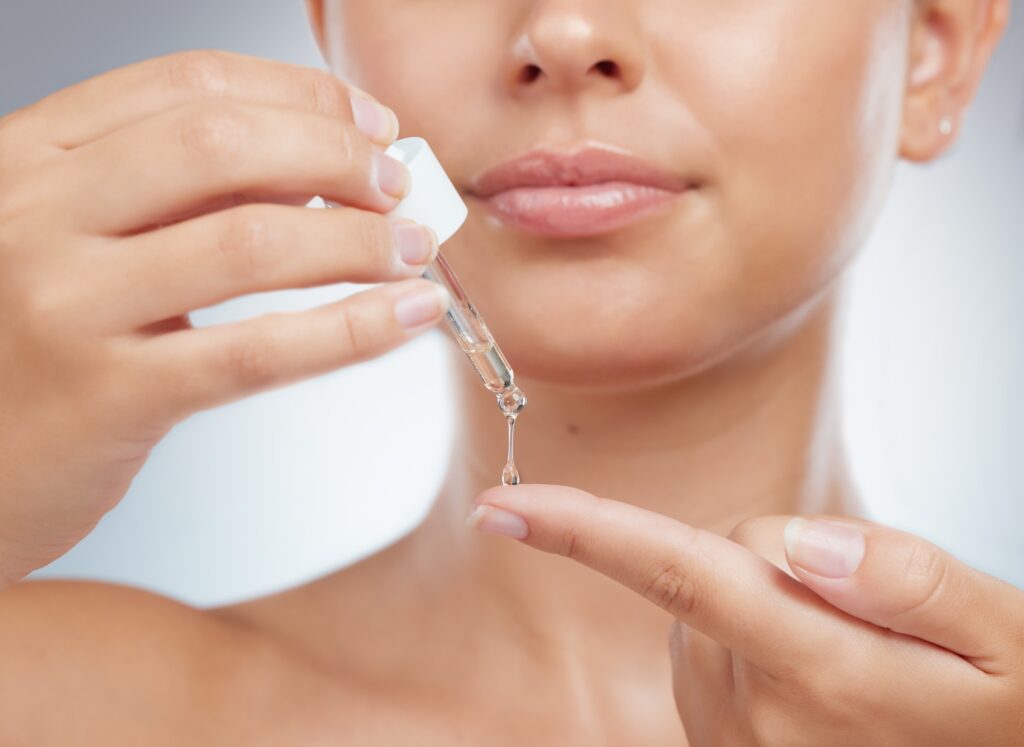
If you’ve spent more than five minutes scrolling through skincare advice online or browsing the beauty aisle, you’ve inevitably hit the Retinol Wall. It is the single ingredient every dermatologist, beauty editor, and skin-savvy friend swears by. They call it the “gold standard” of dermatology, the “holy grail” of anti-aging, and the closest thing we have to a time machine in a bottle.
And they aren’t wrong. It is, without a doubt, the most studied and proven anti-aging ingredient in the history of dermatology.
But here is the honest, unfiltered truth that often gets lost in the hype: It is also the most universally misused ingredient.
At our clinic, we see it every single week. A patient gets excited by a dramatic before-and-after photo, buys a high-percentage serum, slathers it on every night with the hope of waking up with glass skin, and instead wakes up three days later with skin that feels like sandpaper and looks like a bad sunburn. They conclude that “retinol just isn’t for me,” throw a perfectly good (and often expensive) product in the trash, and avoid it for years based on a bad experience.
We’ve seen patients completely destroy their skin barrier by going too hard, too fast. On the flip side, we see patients who could desperately benefit from it avoiding it entirely because of myths that simply aren’t true.
The problem usually isn’t the ingredient itself—it’s the introduction. If you’ve struggled to make retinol work for you, or if you’re simply too intimidated by the horror stories to even start, consider this your masterclass. Here is the down-to-earth, dermatologist-approved guide on how to actually make retinol work with your skin, not against it.
Retinol gets recommended all the time, but the way you use it matters just as much as the product itself. Start with the right strength, use only a pea-sized amount, apply it at night, and build slowly so your skin barrier can keep up.
Used correctly, retinoids may help improve breakouts, uneven texture, dark spots, and fine lines over time. Results vary, and consistency matters more than going too hard too fast.
Save this for later, share it with a friend who’s starting retinol, and follow for more simple, dermatologist-backed skincare.
Link to book in bio.
#skincare #skincaretips #retinol #retinoid #glowingskin


Understanding the “Retinoid Ladder”
“Retinoid” is an umbrella term for all Vitamin A derivatives. Not all retinoids are created equal, and jumping straight to the strongest version is a guaranteed recipe for a compromised skin barrier. Think of it like a ladder; you don’t start at the very top unless you want to fall off. Your skin needs time to acclimate.
- Retinyl Palmitate (The Ground Floor): This is the gentlest entry point. It requires several conversion steps within the skin to become active, making it incredibly mild. This is ideal for those with extremely sensitive skin, rosacea-prone skin, or anyone who is truly nervous about irritation.
- Retinol (The Standard): This is what you’ll find in the vast majority of quality over-the-counter products. It’s highly effective but still requires a conversion process once it hits your skin. It strikes a great balance between efficacy and tolerability for most people.
- Retinaldehyde / Retinal (The Accelerator): One step away from prescription strength. It works much faster than standard retinol because it requires fewer conversion steps to become active retinoic acid. Despite its speed and power, it’s surprisingly well-tolerated by skin that has already gotten used to standard retinol.
- Tretinoin (The Gold Standard): This is pure retinoic acid. It is a prescription-only powerhouse and the absolute pinnacle of the retinoid ladder. It’s incredibly effective for stubborn acne and deep wrinkles, but it requires professional guidance to ensure you don’t overwhelm your skin’s natural defenses.
Is Retinol Actually Right for You?
For the vast majority of people, the answer is a resounding yes. It is a brilliant multitasker that effectively targets acne-prone skin, accumulated sun damage, dark spots, fine lines, deep wrinkles, and uneven, bumpy texture. However, there are times when you absolutely need to hit the “pause” button. Wait to start a retinoid if:
- You are pregnant or nursing: This is a firm rule across the board for safety reasons.
- You are experiencing an active eczema flare: Your skin barrier is already struggling and compromised; do not add fuel to the fire.
- Your skin barrier is currently damaged: If your skin feels stinging, raw, or “tight” when you apply basic moisturizer, you need to focus on healing and hydration first.
- You are using the “Kitchen Sink” approach: If you are already layering high-strength Vitamin C, AHAs (like glycolic acid), and BHAs (like salicylic acid) unsupervised, adding retinol to the mix is a fast track to a chemical burn.
The “Start Low, Go Slow” Method
If you want the famous “retinol glow” without the “retinol uglies” (the dreaded peeling, redness, and flaking), you need a strategy. Protect your skin barrier while introducing the active ingredient by following this strict nighttime-only routine:
- Cleanse Gently: Wash your face with a gentle, fragrance-free cleanser. You want to remove the day’s dirt and makeup without stripping your natural oils.
- The Waiting Game: This is the most crucial and most skipped step! Let your skin dry completely for at least 2 to 3 minutes. Applying retinol to damp skin increases the absorption rate dramatically, which is the number one cause of sudden, severe irritation.
- Apply Sparingly: Use a pea-sized amount for your entire face. Dot it on your forehead, cheeks, and chin, then spread it evenly. More is not better; it’s just more irritating.
- Buffer and Moisturize: Apply a nourishing moisturizer right on top to “buffer” the retinol. This creates a seal that helps lock in hydration and keeps your skin barrier happy while the active ingredient does its heavy lifting underneath.
The Golden Rule of Application: Start using it only 3 times a week (for example, Monday, Wednesday, and Friday nights). Gradually build up to nightly use over a slow period of 4 to 6 weeks. Consistency matters far more than using too much, too soon.
The 4 Biggest Mistakes to Avoid
Even with the right product, technique matters. Here is where most people go wrong:
- Using it in the morning: Retinol breaks down and becomes less effective when exposed to sunlight, and it can make your skin more sensitive to UV rays. Keep it strictly in your nighttime routine, and always wear SPF during the day.
- Applying it to irritated skin: If your skin is angry, skip your retinol night. Listen to your skin.
- Starting daily use right out of the gate: Your skin needs to build receptors to handle Vitamin A. Rushing this process guarantees inflammation.
- Giving up after two weeks of “purging”: Retinol speeds up cell turnover. If you have underlying congestion, it will bring it all to the surface at once, causing a temporary breakout known as a purge. Push through it! Real, structural results take 8 to 12 weeks of consistent use. Be patient.
Quick Q&A: Busting the Myths
“Does retinol thin your skin?” No! This is the most common myth. While it does gently exfoliate the very top layer of dead skin cells (giving you that immediate glow), it actually thickens the deeper layers (the dermis) over time by stimulating your body’s natural collagen production. It makes your skin stronger and more youthful.
“Can I use it under my eyes?” Yes, but with caution. The skin around your eyes is the thinnest on your face and often where fine lines show up first. Use a gentler formula specifically designed for the delicate eye area to avoid irritation.
“Can I use it with Niacinamide?” Absolutely. In fact, they are a match made in skincare heaven. Niacinamide helps to calm the skin, support the barrier, and significantly reduce the irritation commonly associated with retinol.
Ready to Graduate to Professional Results?
Retinol is a journey, and trying to navigate it through trial and error in the drugstore aisle can be frustrating, expensive, and tough on your skin. While over-the-counter options are a great starting point, there is a limit to what they can achieve for stubborn cystic acne, deep-set sun damage, or significant volume loss.
The most effective, transformative skincare isn’t found on a store shelf—it’s found through a personalized, medical-grade plan. Stop guessing with your skin’s health, stop suffering through unnecessary irritation, and start seeing the brilliant results you’ve been promised.
Take the guesswork out of your routine and get a regimen tailored entirely to your unique skin chemistry by the experts who understand it best.
Schedule your consultation with Dr. Lancer at our Beverly Hills clinic today. Let’s build your perfect, irritation-free, anti-aging strategy together.